Bulk arrives, and rolls of the same color sit side by side in visibly different shades. Shade variation in bulk nylon spandex is controlled mainly before the order: sign an approved shade standard that both sides keep, agree which light source colors are judged under, and keep rolls separated by dye lot.
On arrival, compare each dye lot with the standard; if a lot is off, stop cutting, isolate it, document it and negotiate with the supplier. What counts as acceptable is whatever both parties agreed in writing; this article gives no universal number.
Related: How Do You Place a Bulk Order for Nylon Spandex Fabric?
Where does shade variation in bulk nylon spandex come from?
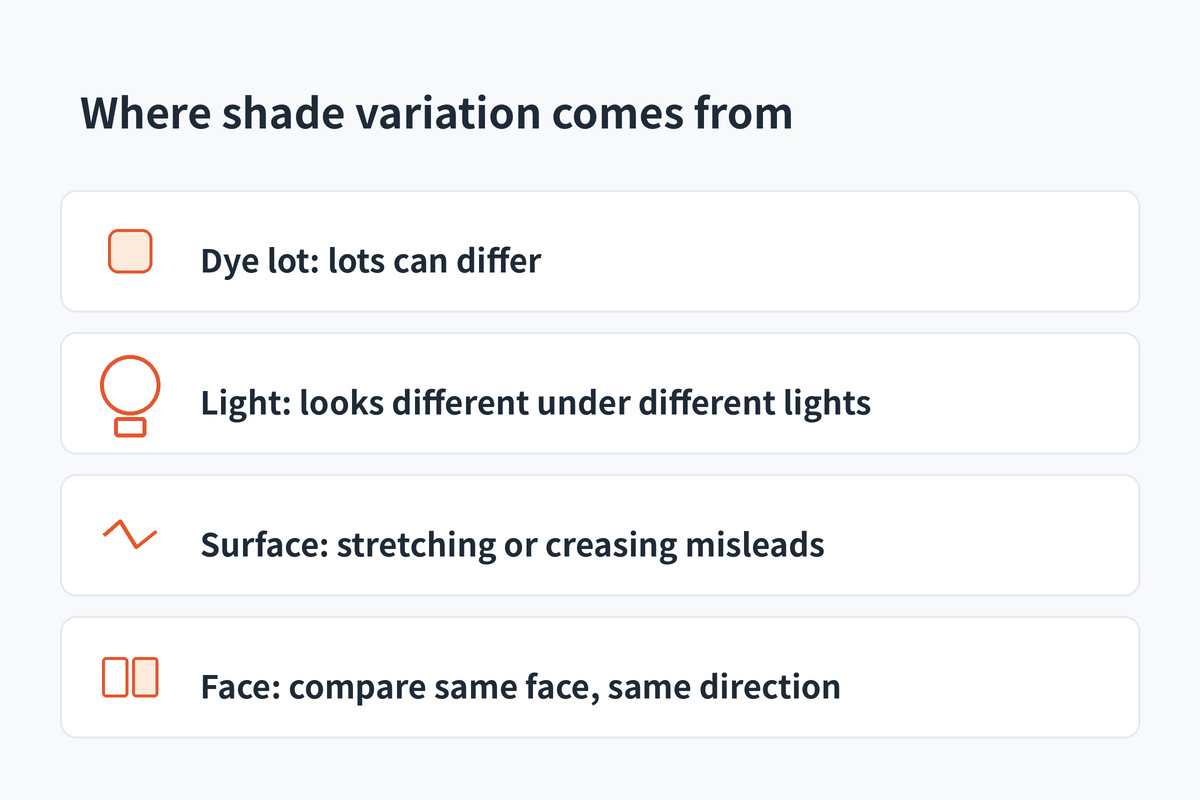
Most shade variation in bulk nylon spandex comes from different dye lots and different viewing conditions. Know which one you are dealing with, and the standard becomes much easier to set.
- Dye-lot variation: one color dyed in several lots can differ lot to lot, so every roll should carry its lot number.
- Light source: the same fabric can look different under stall lighting, daylight and factory lighting. If the light source is not agreed, each side judges by its own light, and nobody can settle it.
- Fabric surface: nylon has good elasticity and recovery but deforms and creases easily under small forces (China Cotton Textile Association educational notes). Stretched or creased fabric can look lighter or darker, so lay it flat without stretching when matching.
- Face and direction: warp-knit nylon spandex often has a different luster on face and back; compare the standard and bulk on the same face and in the same direction.
How do you set a shade standard before ordering?
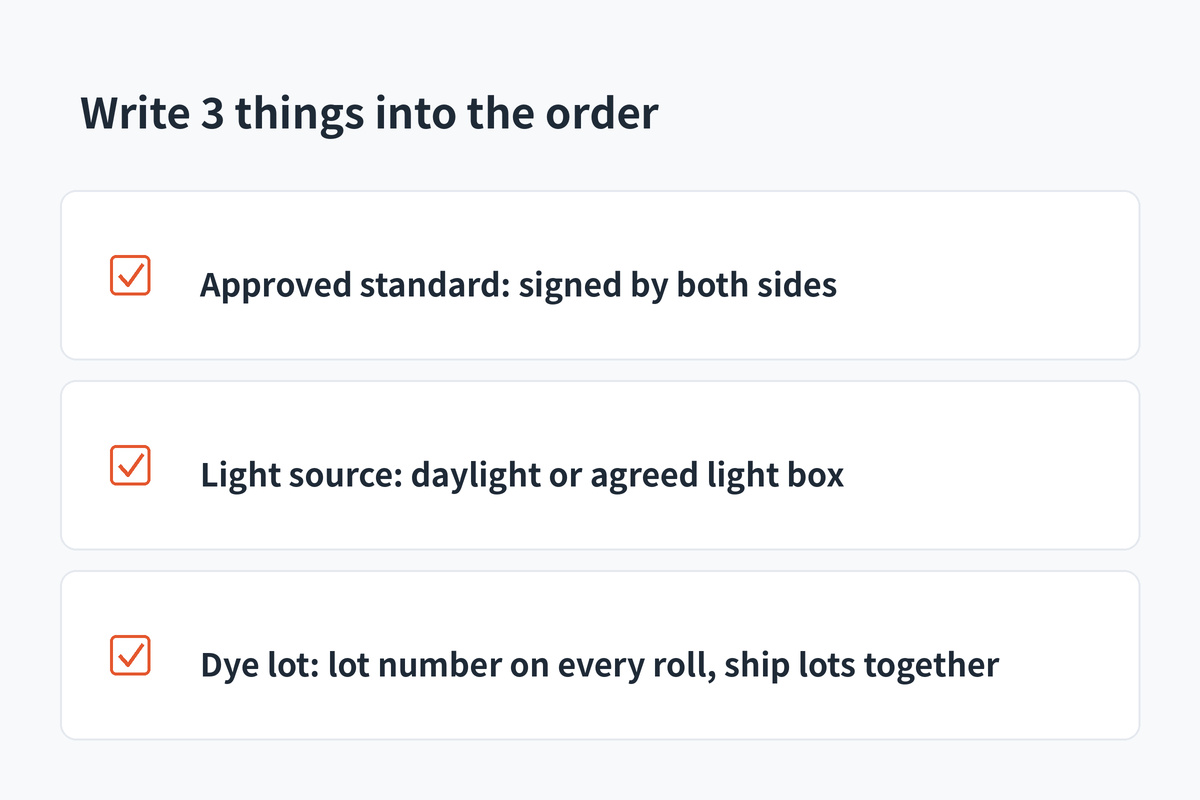
A shade standard for bulk nylon spandex rests on three things: an approved shade standard, a viewing light source and dye-lot rules. Write all three into the order or confirmation sheet.
- Approved standard: cut a swatch of the chosen color, have both sides sign it, and each keep a piece labeled with color name and date. Bulk is compared only with this swatch, not with phone photos.
- Light source: state which light colors are judged under, such as daylight or a light box both sides own. Without a light box, agree on daylight and avoid direct sun and colored lights.
- Dye-lot rules: ask how many lots the color will be dyed in, require a lot number on every roll, ship each lot together, and cut one garment batch from one lot where possible.
- Tolerance: acceptable variation is agreed in writing against the approved standard. This article does not give specific shade-grade figures.
Standard, light source, dye lot: comparison table
Orders that spell out these items usually lead to fewer receiving disputes; verbal-only orders are hard to settle when a shade is off.
| Item | Write in the order | Risk if verbal only | Use on arrival |
|---|---|---|---|
| Approved standard | Signed by both sides, color name and date | Matching from phone photos | Compare a cutting from each lot side by side |
| Light source | Daylight or an agreed light box | Looks the same at the stall, different at the factory | Both sides re-check under the same light |
| Dye lot | Lot number on every roll, ship lots together | Mixed lots found only after cutting | Store and cut by lot |
| Fabric surface | Flat, same face, same direction | Stretched or creased fabric misread | Lay flat, no stretching |
How do you check shade on arrival?
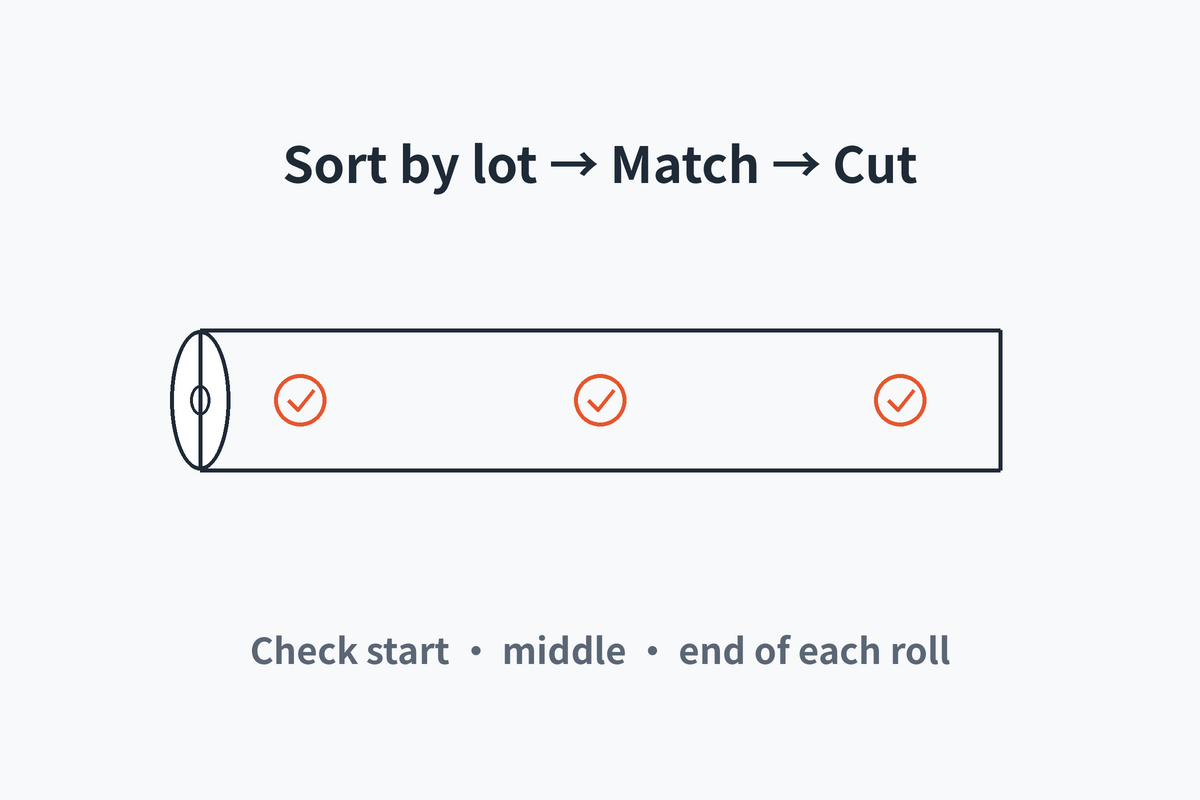
When bulk nylon spandex arrives, sort by dye lot first, compare each lot with the approved standard, and only then start cutting. At Guangzhou Zhongda, buyers checking dye lots usually line up a cutting from each lot next to the standard under one light. Maoxing Textile Dyeing has worked with nylon spandex fabric at Guangzhou Zhongda for 15 years, with our own knitting mill and our own dye house, and "sort, match, then cut" is the order we suggest to every buyer who comes to match shades.
- [ ] Every roll has a lot number matching the delivery note
- [ ] A cutting from each lot is compared with the standard, same face and direction, laid flat
- [ ] Judged under the agreed light; re-checked in daylight if unsure
- [ ] Start, middle and end of each roll checked for consistency within the roll
- [ ] Surface check: pilling can be graded 1-5 under GB/T 4802.1-2008 (circular locus method), 5 no change, 1 severe over the whole piece, higher is better; check the report if there is one, otherwise record "not tested"
- [ ] Next-to-skin garments (underwear, swimwear) labeled with a GB 18401-2010 safety category, at least B for direct skin contact
- [ ] For swimwear, ask whether colorfastness to pool water was tested to GB/T 8433-2013 (chlorinated water); the report decides
Related: How to Check Colorfastness on Nylon Elastane Fabric
What should you do if bulk fabric is off-shade?
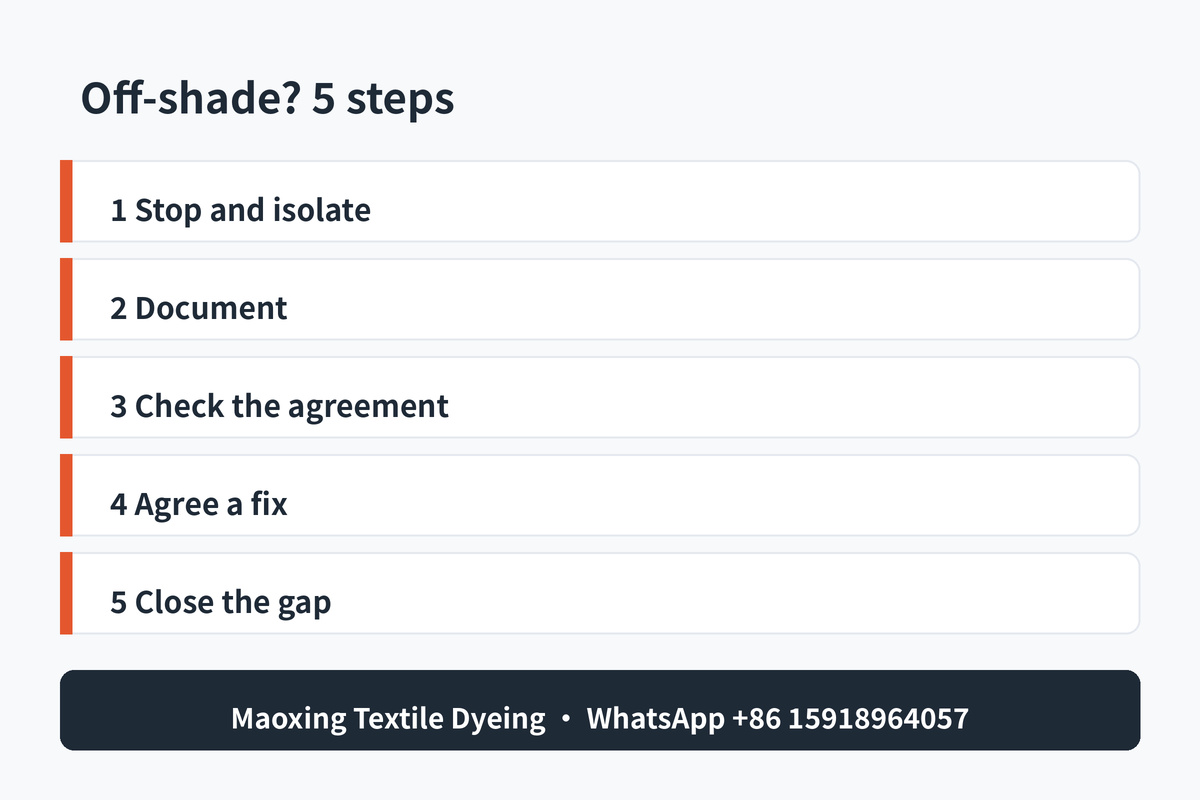
If bulk nylon spandex is off-shade, stop cutting, isolate the lot, document it, then negotiate with the supplier using the approved standard. Once lots are mixed in cutting, responsibility gets harder to sort out.
- Stop and isolate: keep the problem lot apart, and keep any cut panels sorted by lot.
- Document: photograph the lot cutting next to the standard under the agreed light; record lot number, roll number and arrival date.
- Check the agreement: judge against the standard, light source and lot rules in the order.
- Agree a fix: common options are using each lot for separate styles (one garment, one lot), or replacing or re-processing the lot, depending on what was agreed.
- Close the gap: add whatever was missing to the next confirmation sheet.
FAQ
Is dye-lot variation the same as colorfastness?
No. Dye-lot variation is color difference between batches; colorfastness is whether one fabric loses or changes color under washing, sweat, rubbing or light. Agree and check them separately.
Can shade vary within one roll?
It can, so check the start, middle and end of each roll. If it varies, follow the same document-and-negotiate steps.
Does a small single-lot order still need a standard?
Yes. A single lot still needs matching, and a repeat order's new lot must match the same retained standard.
Do I need a light box?
Not necessarily; what matters is that both sides use the same light. Without one, agree on daylight away from direct sun.
Contact
Maoxing Textile Dyeing is a source knitting and dyeing factory specializing in nylon spandex stretch fabric. Showroom: Stall 16-18, North 5th Street, Zhongda Jiangnan Textile City, Haizhu District, Guangzhou. WhatsApp: +86 15918964057. Email: zhangzengwen@mail.gzmaoxing.com