One "they go see-through when I squat" review can sink a leggings style. Whether leggings fabric turns sheer during a squat needs checking on samples of the relevant color under comparable stretching and fitting conditions; a dark shade or hand feel cannot decide it.
When sourcing nylon spandex (polyamide elastane), fix the light, background and viewing setup, then observe show-through when stretched and whether the fabric lies flat after release. Review pilling reports separately: they support the corresponding pilling performance, not a squat-opacity claim.
Which conditions should you fix before viewing samples?
Fix viewing conditions first so differences between samples are meaningful.
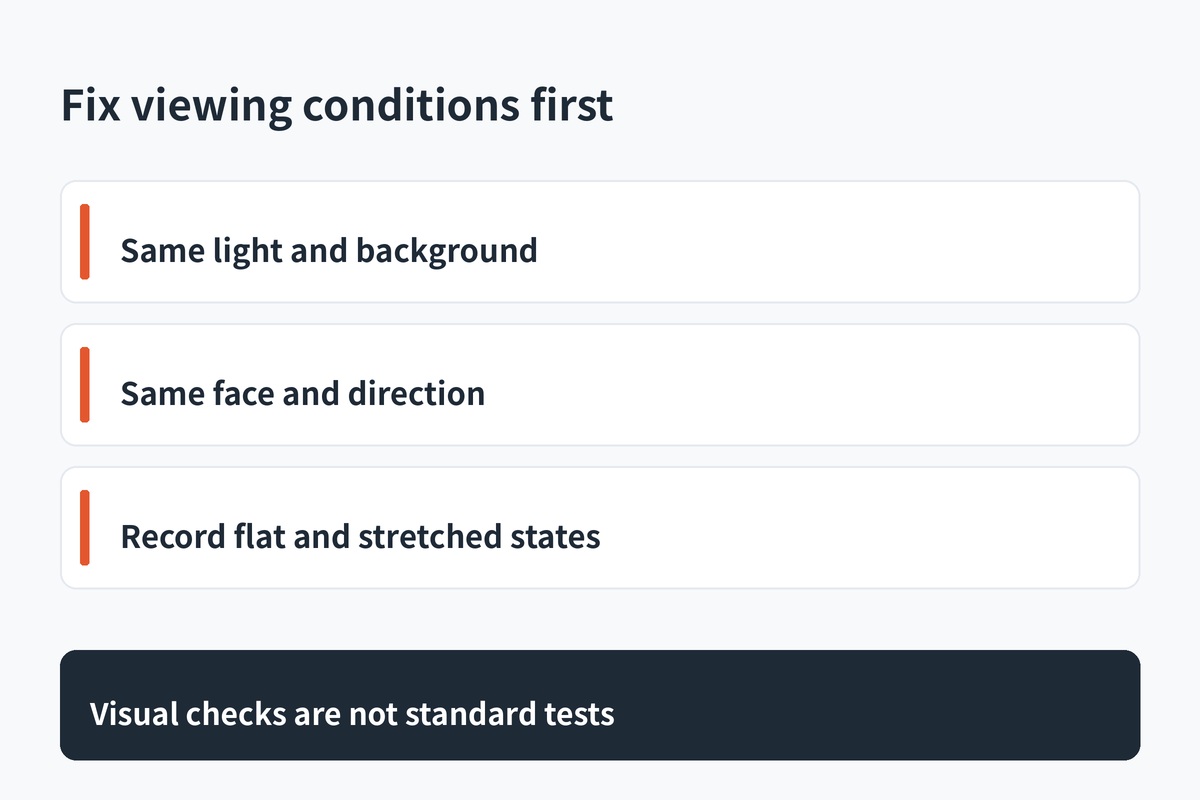
These are sourcing suggestions, not a standard test method, and provide neither light-transmittance measurements nor a numerical recovery rate. Findings apply only to the samples and recorded conditions.
- Light and background: use the same light source and background. If either changes, keep a separate set of observations rather than merging findings.
- Face and direction: compare the same face and direction, stating whether the swatch is flat or stretched. Do not compare folded fabric with a single layer.
- Stretching: use a consistent hand action and a similar stretched state, recording the direction. Hand stretching cannot control conditions precisely and is only an initial screen.
- What to observe: record visible background color, outlines or local sheerness. Do not turn a visual observation into an instrument-based result.
Where should you look after stretching to address squat sheerness?
After viewing flat swatches, observe the seat and locally stretched areas of sample leggings in the intended pattern and size during a squat.
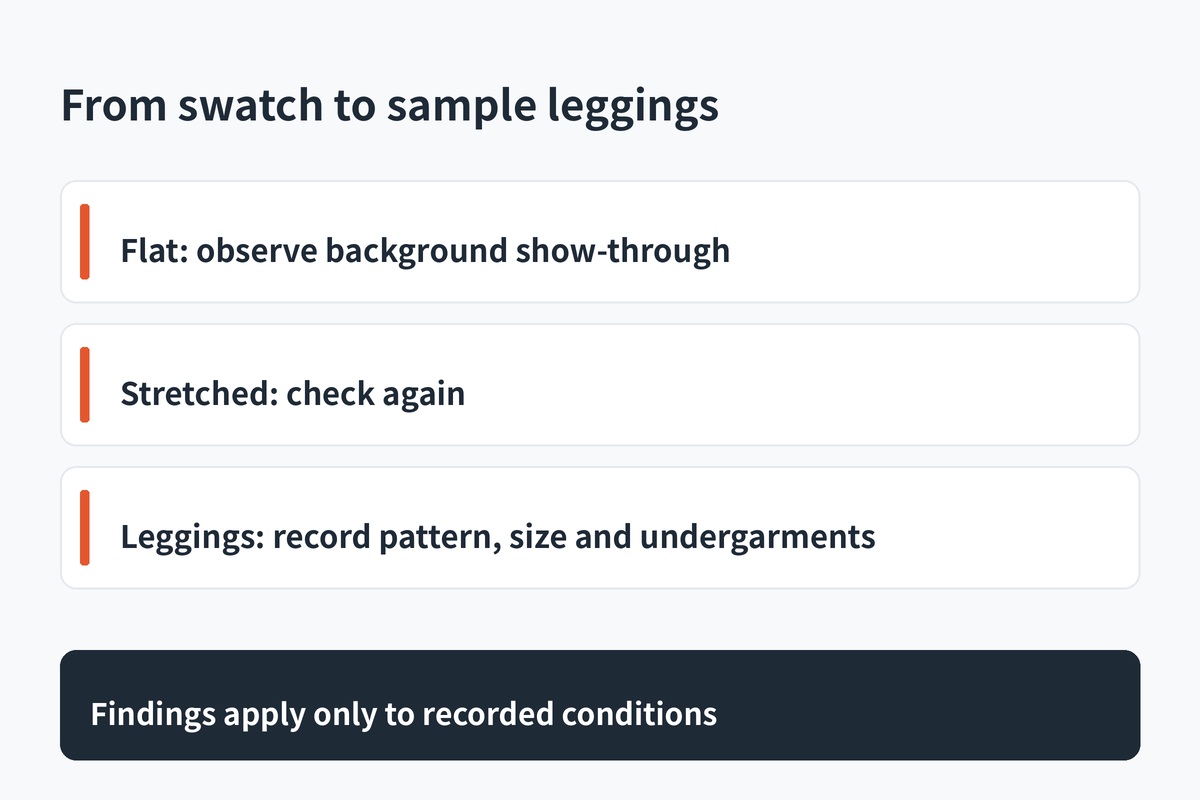
- Swatch first: compare flat and stretched fabric against the background and record whether its color becomes more visible. Use wording such as “visible/not clearly visible under these conditions,” not an all-use opacity claim.
- Sample leggings next: squat under the same light with the same undergarment conditions, recording show-through or outlines at the seat and near seams. Re-check when size, pattern or undergarments change.
- Separate fabric from garment: stretched swatches screen candidates; sample leggings reflect a particular construction and wearing setup. Do not attribute every pattern-related difference to fabric.
Maoxing Textile Dyeing has worked with nylon spandex fabric at Guangzhou Zhongda for 15 years, with our own knitting mill and our own dye house. When buyers check samples with us, we suggest separate fields for swatch and garment observations, retaining color, direction, light and fitting conditions instead of recording only “opaque.”
Related: Choosing yoga fabric by practice
Can a dark color skip the stretch check?
A dark shade is not an opacity guarantee; observe every intended purchasing color separately under the same conditions.
This article does not judge or rank coverage by color depth; observe each color separately under the same recorded conditions. State whether color comparisons use the same fabric and construction; if other conditions change, differences cannot be attributed to color alone.
- For different colors of the same fabric, record flat, stretched and garment-squat observations separately.
- If a dark sample looks opaque, the finding still applies only to that sample and viewing setup.
- If a pale sample shows background color, retain it with the conditions before deciding on further sampling; do not infer the same result for other colors.
What do release recovery and a pilling report each tell you?
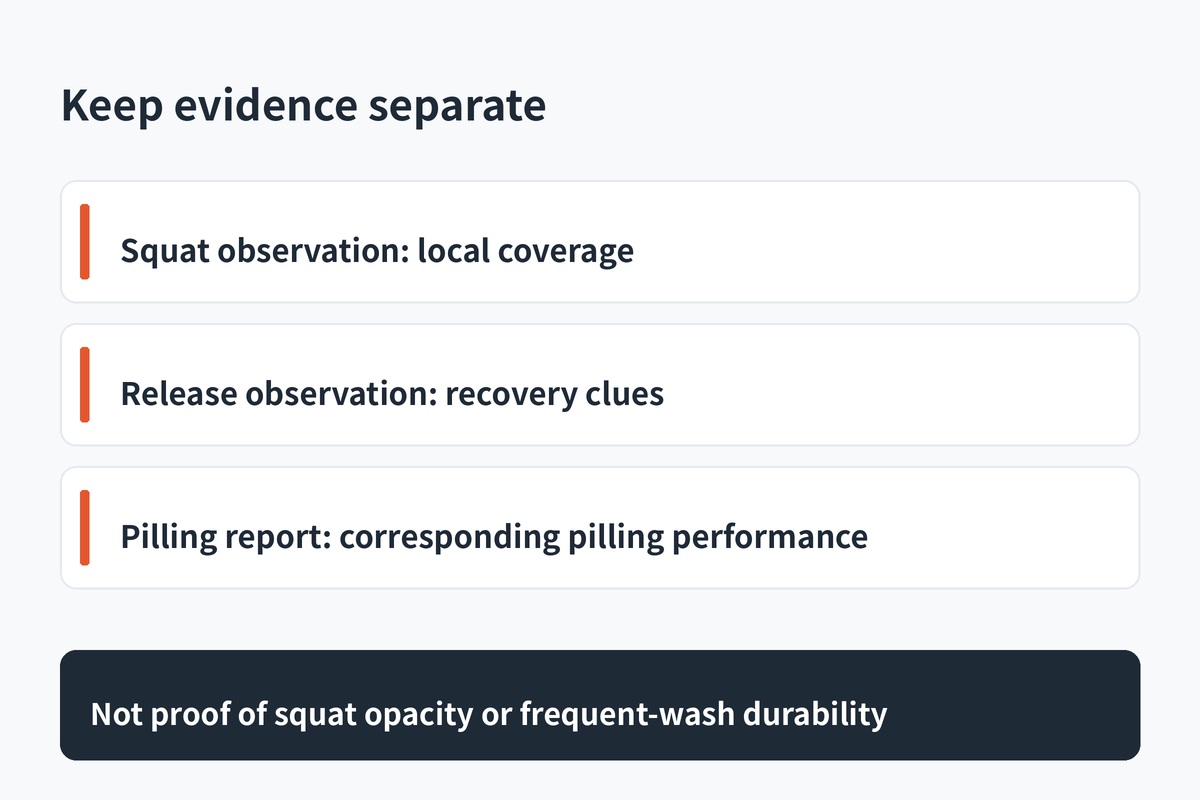
Lying flat after release gives a visual recovery clue, while a pilling report supports performance under its stated test conditions; neither replaces squat observation.
China Cotton Textile Association educational notes describe nylon as strong and abrasion-resistant, with good elasticity and recovery, but prone to deformation and creasing under small forces. These fiber characteristics guide selection; they are not test results for a particular finished nylon spandex fabric.
- Observe recovery: stretch and release, recording whether the swatch lies flat or retains marks or bagging. Compare candidates consistently; do not calculate a recovery rate or promise no loosening with wear.
- Review pilling documentation: GB/T 4802.1-2008, the circular locus method, grades pilling from 1 to 5, with higher grades indicating better pilling resistance. Check that the report covers the selected fabric, method and grade. Record missing documentation honestly; do not assign a grade by hand rubbing.
- Keep evidence in scope: a pilling grade is not a squat-coverage grade and does not establish durability after frequent washing. Abrasion-resistant fiber characteristics do not mean finished fabric cannot pill.
Related: Checking snagging and pilling in nylon spandex
How should you record sample findings without overextending them?
Record evidence types separately: visual observations, pilling reports and safety-category documentation cannot stand in for each other.
| Check | What to record | What it does not establish |
|---|---|---|
| Flat and stretched visual check | Background show-through under stated light, background and direction | Light transmittance or a standard-test pass |
| Sample-legging squat observation | Local behavior for stated color, pattern, size and undergarments | Opacity for every color and wearing condition |
| Release recovery | Flatness, marks or bagging | A numerical recovery rate or no-loosening promise |
| Corresponding pilling report | Pilling grade for that method and conditions | Squat opacity or frequent-wash durability |
| Safety documentation | Whether category evidence matches the garment use | Coverage or pilling performance |
Under GB 18401-2010, products in direct contact with skin must meet at least category B, and the label must state the category. Review documentation for the corresponding finished next-to-skin leggings separately; no safety category is assigned to Maoxing Textile Dyeing products here.
Before approving samples, retain light, background, color, stretch direction, garment conditions and documentation together. If the conditions of an observation are unclear, repeat it; record missing reports as “not provided” rather than filling in a verbal grade.
FAQ
Squat-coverage judgments must refer to specific samples; these answers distinguish observations from report findings.
Does dark leggings fabric guarantee opacity during a squat?
No. Observe dark samples under comparable light, background and stretch conditions, then squat in sample leggings of the intended pattern and size with stated undergarments. Findings apply only to those samples and conditions.
Do you still need sample leggings if a flat swatch hides the background?
Yes. A flat visual check records unstretched behavior only. Sample leggings need a separate check of local coverage when stretched during a squat; the flat finding cannot replace it.
Can you state a recovery rate if fabric lies flat after release?
No. Visual flatness is only a sample observation. Without quantitative test evidence, do not state a recovery rate or promise that the fabric will never loosen with wear.
Can a pilling report prove squat opacity or frequent-wash durability?
No. A pilling report supports only the corresponding fabric’s pilling performance under the stated method and test conditions. It cannot replace visual squat observation or establish durability after frequent washing.
Contact
Maoxing Textile Dyeing specializes in nylon spandex stretch fabric. Showroom: Stall 16-18, North 5th Street, Zhongda Jiangnan Textile City, Haizhu District, Guangzhou. WhatsApp +86 15918964057. Email: zhangzengwen@mail.gzmaoxing.com